Inference is the new gold rush
Training a model makes headlines. Running it, billions of times a day, is where the money and the electricity now go.
This story is also becoming a short film for YouTube. Music only, sources on screen.
Every time someone asks a chatbot a question, a model has to run: that is inference. Training happens once; inference happens every second of every day, for every user.
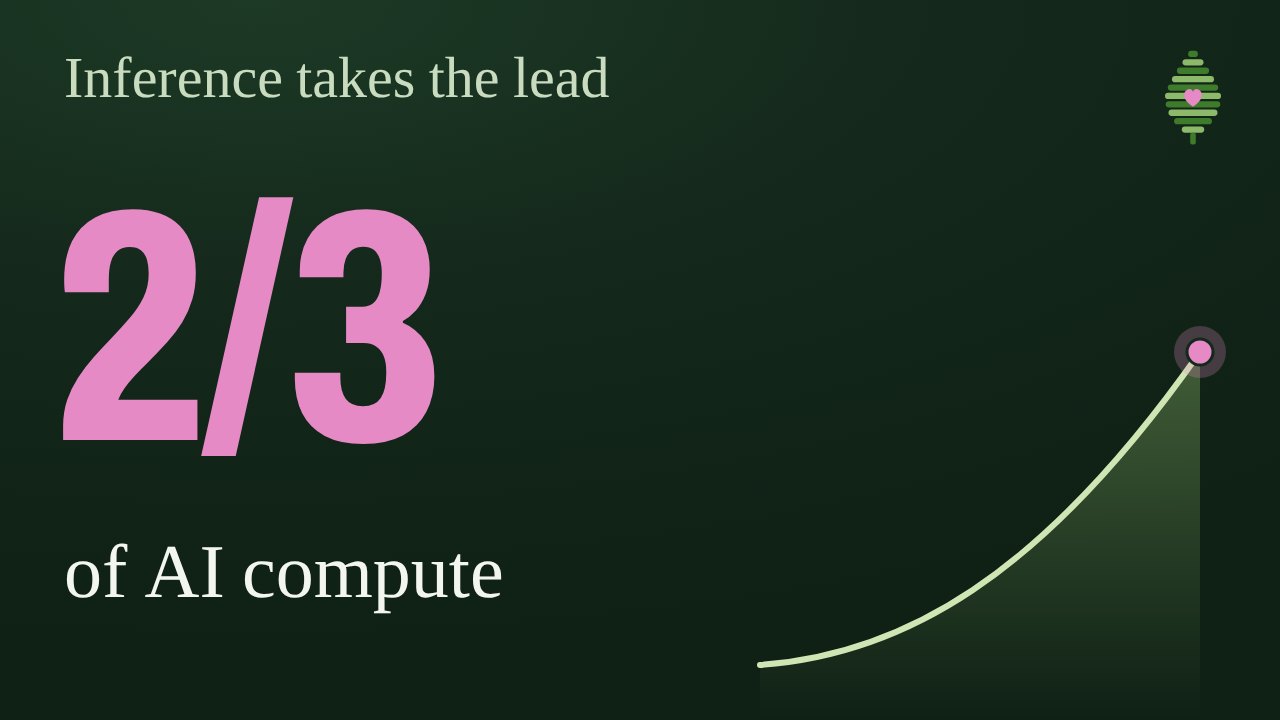
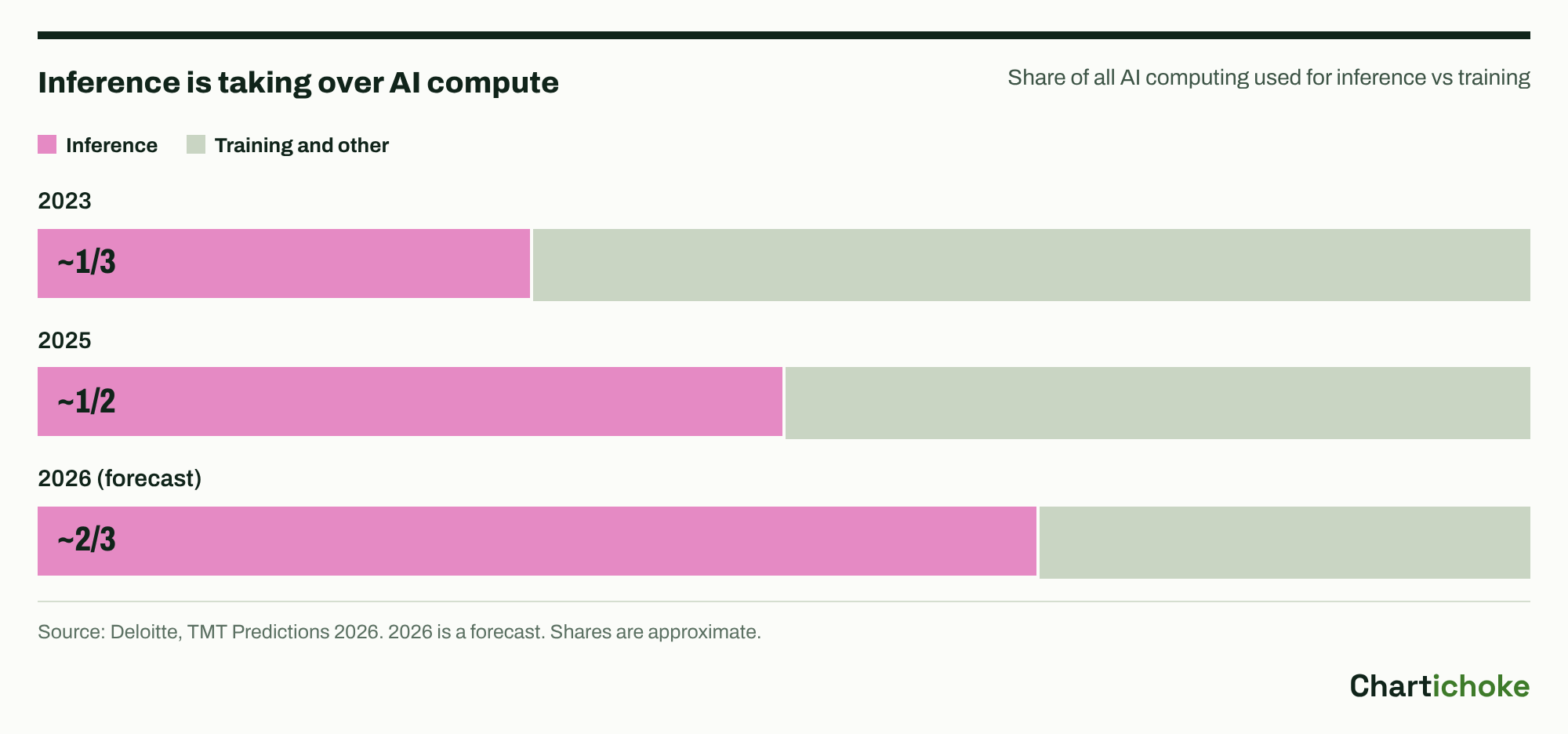
Deloitte expects about two-thirds of AI computing to go to inference in 2026, up from about a third in 2023. That shift is changing which chips sell, where data centres get built and how much power AI needs.
Tap any underlined term for a plain-English explanation.
The story in one chart
Drag to slide, zoom, click any moment.- Milestone
- Turning point
- Drag to slide, scroll the strip to zoom, click a marker
How it works
Training is how a model learns: it is shown trillions of words or images and its billions of internal numbers are nudged, over and over, until its answers improve. It happens once per model, on huge clusters, over weeks or months.
Inference is using the trained model: every chat reply, every code suggestion, every AI search answer. Each one is small, but it happens billions of times a day, every day.
The shift
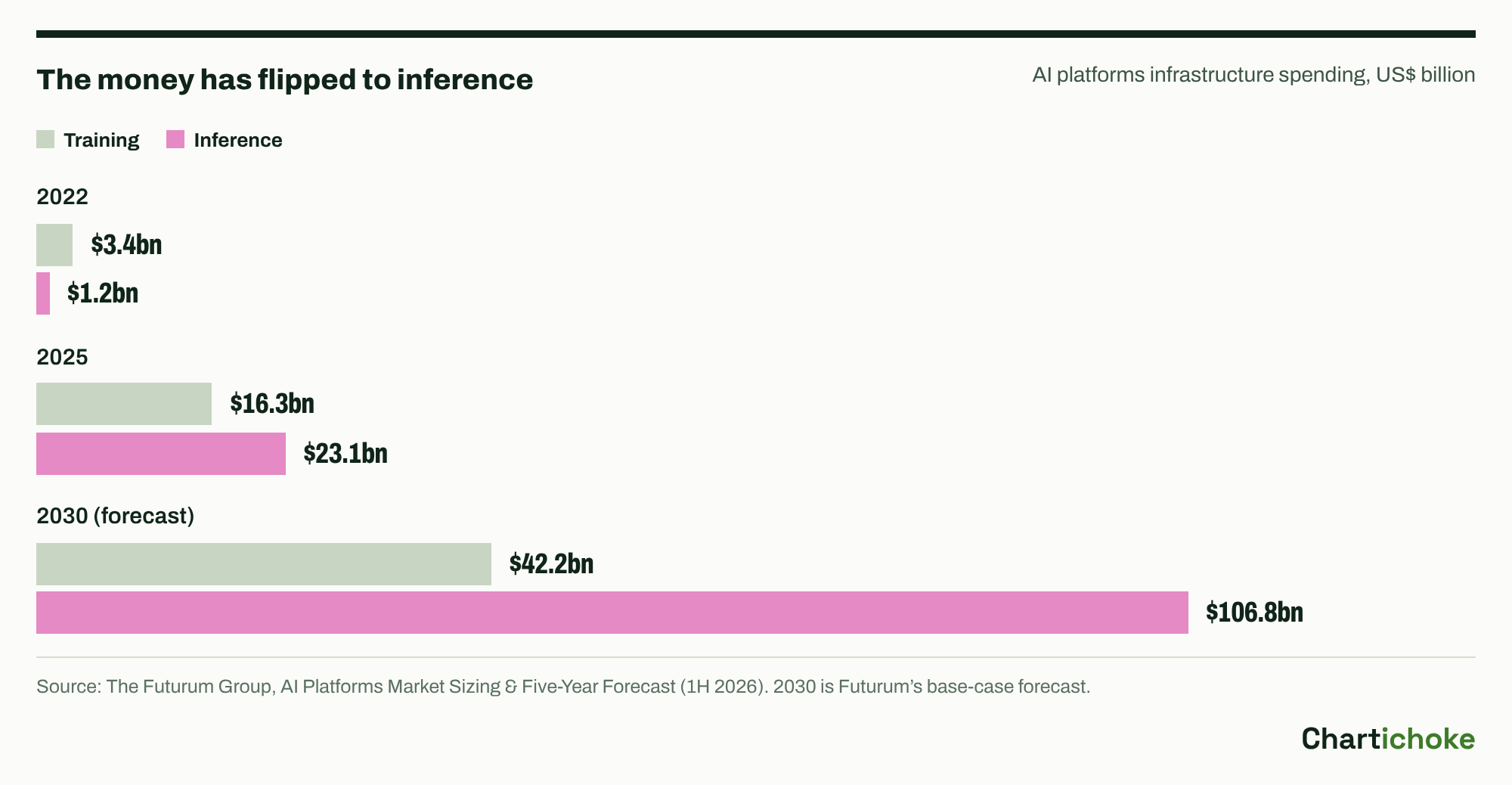
In 2023 inference used about a third of all AI computing. By 2025 it was about half, and Deloitte forecasts about two-thirds in 2026. Money follows the same path: in Futurum’s figures, spending on managed inference overtook training in 2025.
Why inference is a different problem
Training is limited by raw arithmetic: more chips, more maths. Inference has two halves. Prefill reads your prompt all at once, and that is maths-heavy. Decode writes the answer one token at a time, and each token means reading the model’s weights and its running memory (the KV cache) back out of memory. So decode is limited by memory bandwidth more than by maths.
That is why new AI chips brag about memory as much as speed. Nvidia’s Rubin GPU carries 288 GB of HBM4 memory with about 22 TB/s of bandwidth. It is also why a wave of inference-only chips has arrived, from Google’s TPUs to custom silicon from Amazon, Meta and start-ups.
Thinking costs compute
Reasoning models, which arrived in late 2024, “think” before they answer by writing long internal chains of steps. That is called test-time scaling. It makes answers better and every answer more expensive. Add AI agents that call tools in loops, and the number of tokens per task balloons. Deloitte expects computing demand to keep rising four to five times a year out to 2030, even as chips get more efficient.
What it means for data centres
Training can happen anywhere there is cheap power. Inference wants to be near users, so responses arrive fast. Expect more inference capacity in and around big cities, including Sydney and Melbourne, and power demand that rises and falls with how much people use AI, not with when a model is trained.
The turning points
All 9 moments on the full timeline →- 01Nov 2022
Inference goes mainstream
ChatGPT turns model inference into a consumer service with millions of users.
- 02Sept 2024
Reasoning models
Models that think step by step make each answer more compute-hungry: test-time scaling.
- 032026
Two-thirds
Deloitte forecasts inference at about two-thirds of AI compute, and a market for inference-optimised chips worth more than US$50bn. Nvidia says Rubin cuts cost per token to a tenth of Blackwell (company claim).
~2/3of AI compute (forecast)
Go deeper
- Deloitte, TMT Predictions 2026: compute power and AI
- Deloitte, 2026 TMT Predictions press release
- Futurum Group, Inference climbs to 71.7% of AI platforms infrastructure spend by 2030 (Aug 2026)
- McKinsey, Scaling AI inference
- Tech Insider, Nvidia Vera Rubin platform (GTC 2026)
Corrections: [email protected]. See how we check numbers.
More stories
All 19 stories → Film coming soonData story 02 · AI and computeThe GPU that ate the worldA chip built to draw video games became the engine of AI. How the graphics card beat the CPU, and why Nvidia got there first.
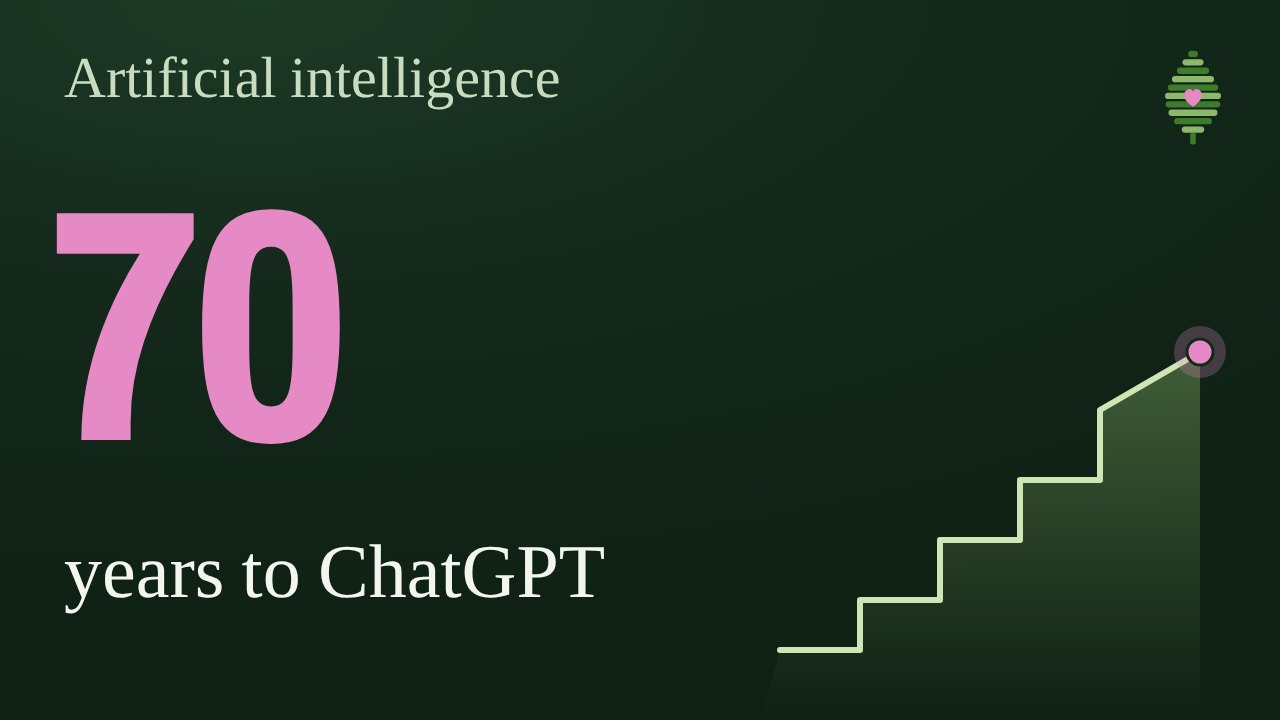 Film coming soonData story 03 · AI and computeSeventy years of AI: two winters and a gold rushArtificial intelligence got its name in 1956. It took two funding winters, a chess match and a pile of gaming chips to get to ChatGPT.
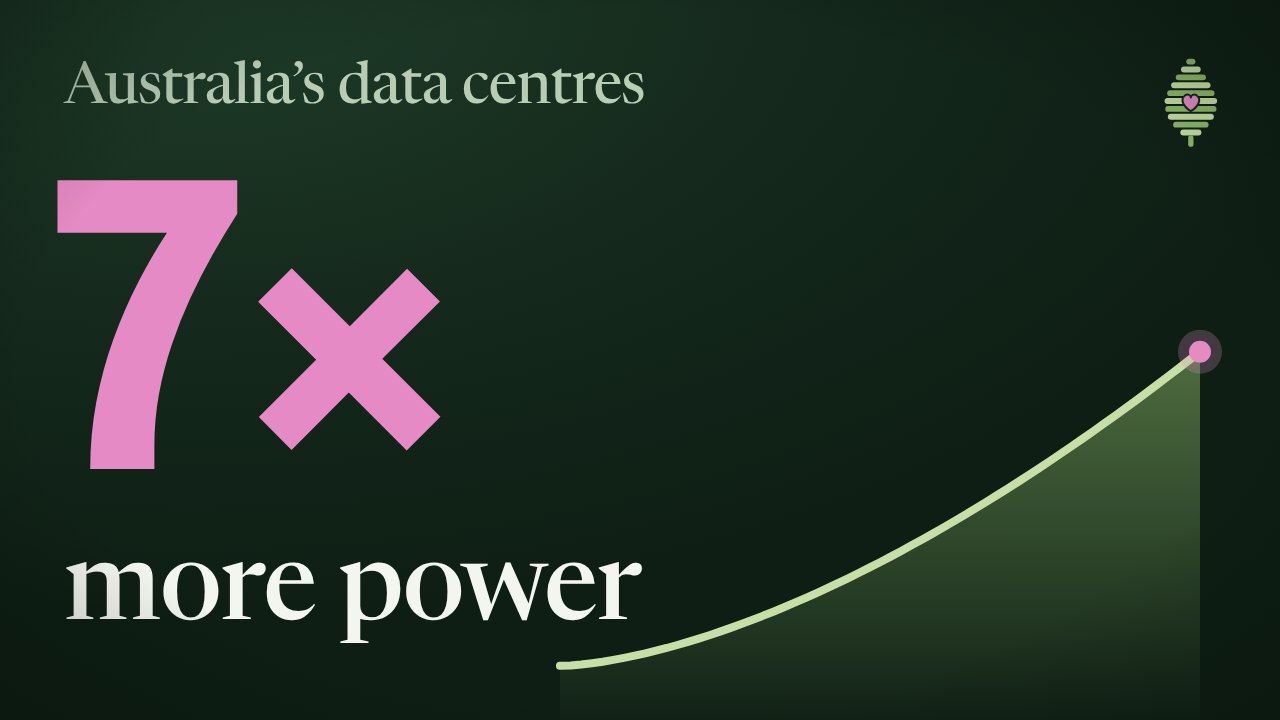 Film · 8:10Data story 01 · Data centres and powerAustralia’s data centre and power boomAEMO now expects data centres to use seven times more electricity within a decade. Here’s where they’re going, who’s queuing to plug in, and who pays.