Was 4G the tipping point for the internet giants?
Fast mobile data arrived just as Facebook, Amazon and the app economy took off. For some companies it was the turning point. For Amazon, the profits came from somewhere else.
 Read the story · film coming soonHow 4G made the internet giants rich→
- Milestone
- Turning point
- Australia
- Drag to slide, scroll the strip to zoom, click a marker
4G mobile networks rolled out from late 2009, reaching most rich countries between 2010 and 2014. Combined with cheap smartphones, they moved the internet from the desk to the pocket. Did that make the tech giants rich? The honest answer: for some, yes, decisively; for others, it was one tailwind among several.
Facebook: 4G was the turning point
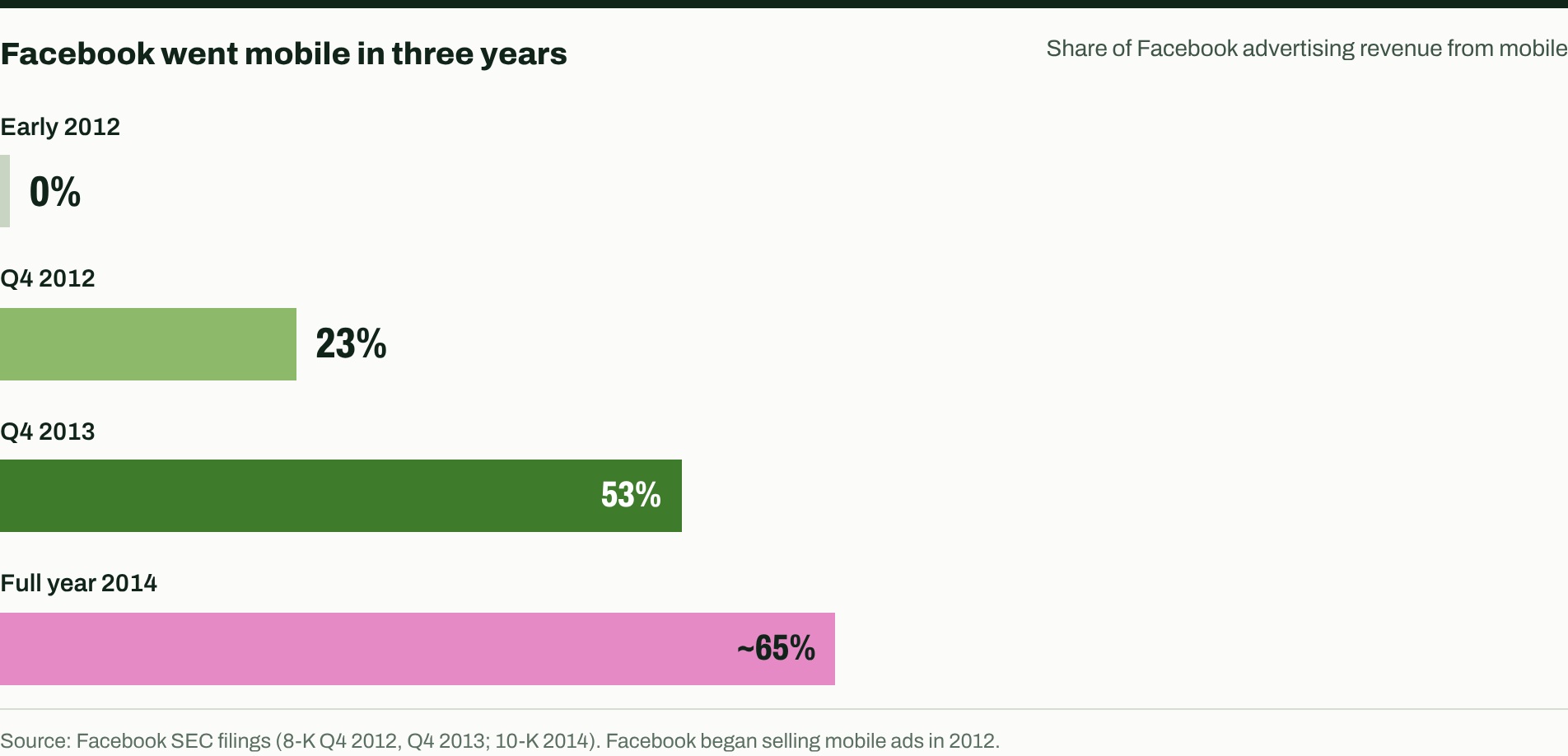
When Facebook listed in May 2012 at US$38 a share, investors worried that users were moving to phones, where it showed no ads at all. Within four months the shares had roughly halved. Facebook had only started selling mobile ads in 2012.
Then the bet paid off. Mobile was 23% of Facebook’s ad revenue by the last quarter of 2012, about 45% across 2013 and about 65% across 2014. The company that was “too desktop” became the most successful mobile advertising business in the world. Instagram, bought in 2012, was mobile-only from day one.
Amazon: the profits came from the cloud
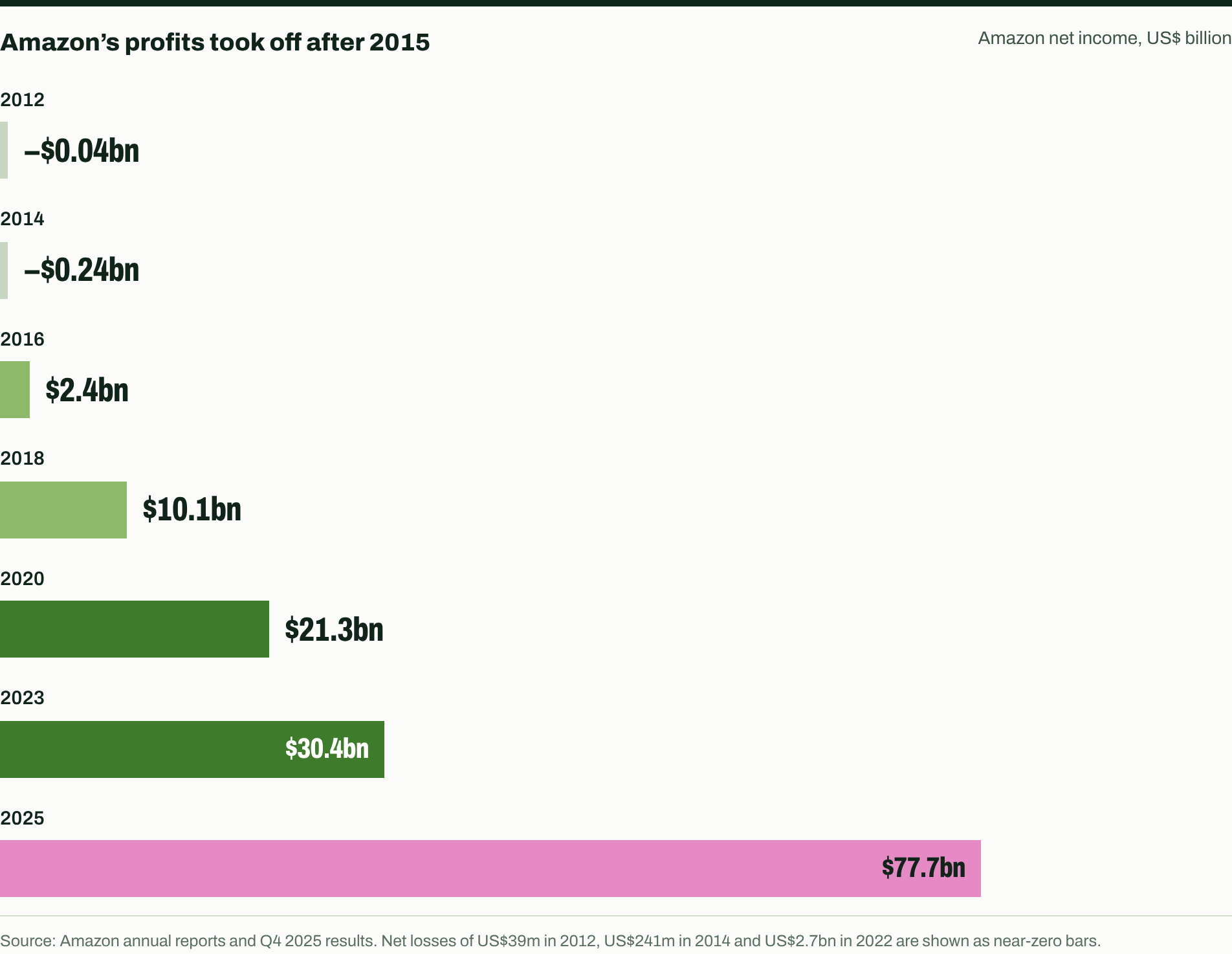
Amazon’s net income barely moved through the early 4G years: a loss in 2012, US$274m in 2013 and another loss in 2014. Profits only took off from 2015, the first year Amazon revealed the figures for AWS, its cloud computing arm, which launched in 2006, before 4G existed.
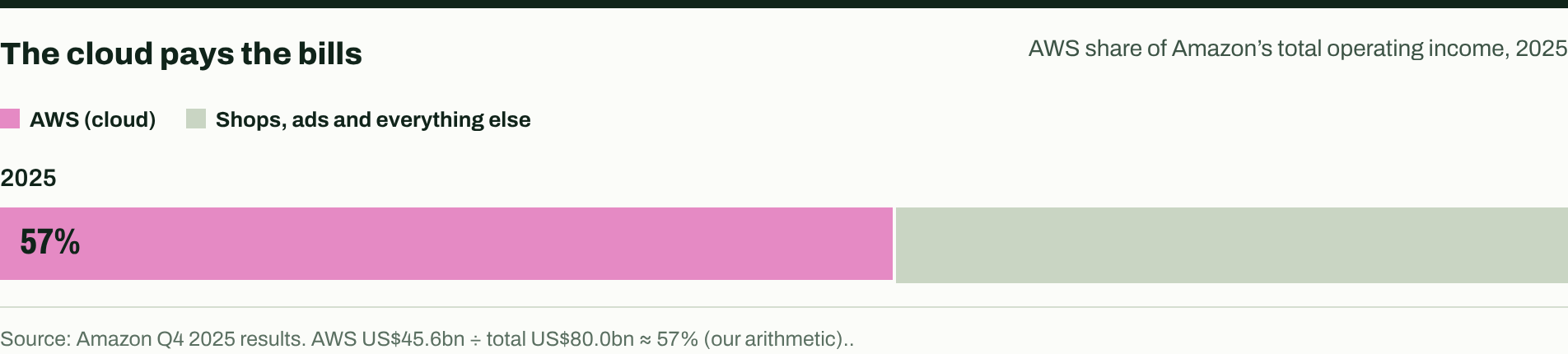
AWS has supplied the bulk of Amazon’s operating profit ever since: about two-thirds in 2015 and more than all of it in 2017, when the shops lost money abroad. In 2025 it earned US$45.6bn of Amazon’s US$80.0bn in operating income. Mobile shopping certainly grew Amazon’s sales, and the apps and services built for phones run largely on clouds like AWS. But the profit engine was the data centre, not the phone network.
The verdict
4G was the tipping point for companies whose product is the phone experience: Facebook and Instagram, Uber (launched 2010), WhatsApp, Snapchat and TikTok. For Amazon, Apple and Google it was an accelerant on businesses already built. And in every case the money flowed to the data centres running the apps, which is the story behind today’s AI build-out.
This is analysis, not investment advice. Share prices also rose with low interest rates through the 2010s, which makes it hard to credit any single cause.
- 20062006
AWS launches
Amazon starts renting computing and storage. Few see it as the future profit engine.
- 2007June 2007
The iPhone
Mobile web becomes usable; the App Store follows in 2008.
- 2009Dec 2009
First 4G network
TeliaSonera launches commercial 4G LTE in Stockholm and Oslo.
- 20102010
Uber and Instagram
Two businesses that only make sense with fast mobile data launch.
- 2011Sept 2011Australia
4G in Australia
Telstra launches Australia’s first 4G network.
- 2012May 2012
Facebook’s rocky IPO
Listed at US$38 a share, the stock roughly halves within months on fears it can’t make money on phones.
- 2012Q4 2012
Mobile ads take off
Mobile reaches 23% of Facebook ad revenue, from zero at the start of the year.
23%of ad revenue - 20142014
Facebook goes mobile-first
About 65% of Facebook’s ad revenue now comes from mobile. Amazon posts a net loss.
- 2015April 2015
Amazon reveals AWS
Amazon reports AWS figures for the first time: a highly profitable business hidden inside a low-margin retailer. The shares re-rate.
- 20172017
AWS earns more than all of Amazon
AWS operating income exceeds Amazon’s total as the international shops lose money.
- 2018Sept 2018
US$1 trillion
Amazon briefly becomes the second US company worth US$1 trillion, weeks after Apple.
- 20222022
A rare loss
Amazon reports a net loss of US$2.7bn, largely from a write-down on its stake in electric-vehicle maker Rivian.
- 2024June 2024
US$2 trillion
Amazon’s market value passes US$2 trillion as AI lifts cloud demand.
- 20252025
Record profit
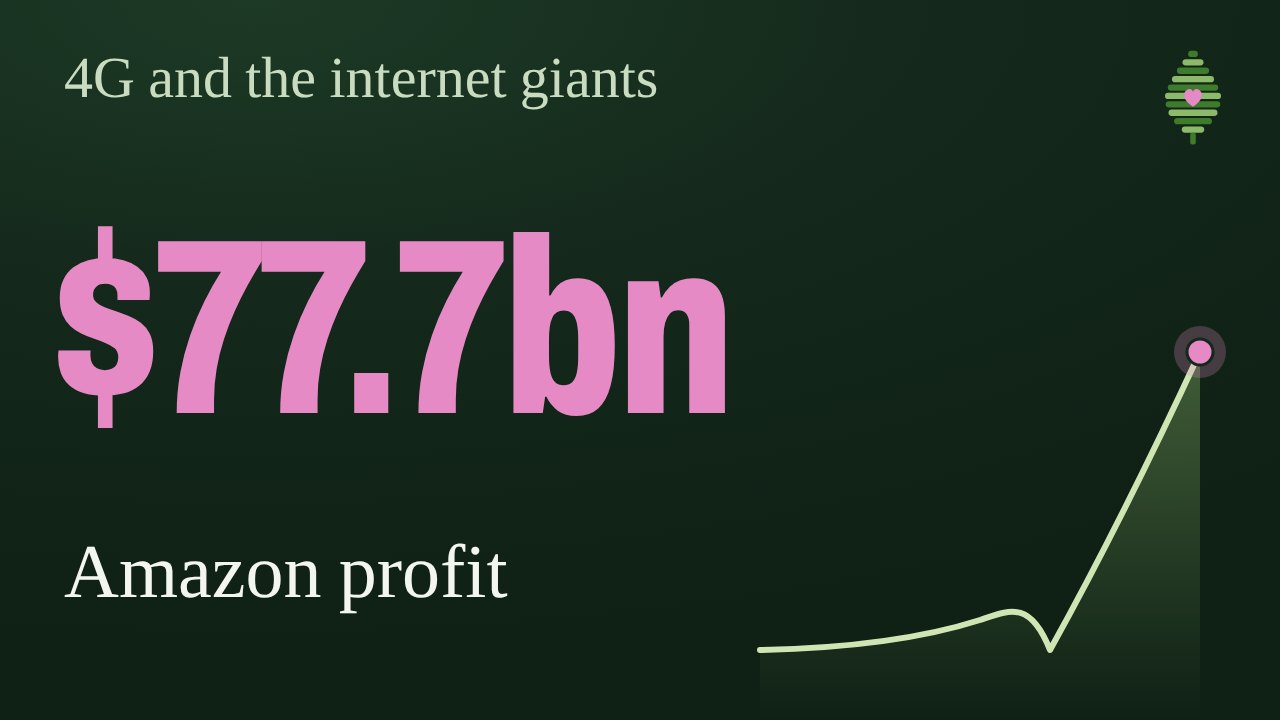
Amazon earns US$77.7bn net income; AWS supplies US$45.6bn of US$80.0bn in operating income. Amazon plans about US$200bn of capital spending in 2026, much of it on AI.
US$77.7bnnet income
- Facebook Q4 2012 results (SEC 8-K)
- Facebook Q4 2013 results (SEC 8-K)
- Facebook 10-K 2014 (mobile 65% of ad revenue)
- Amazon Q4 2025 results
- Amazon annual net income (Macrotrends, from company filings)
Dates for early events are widely documented; recent figures are labelled with their source, and forecasts are marked as forecasts.